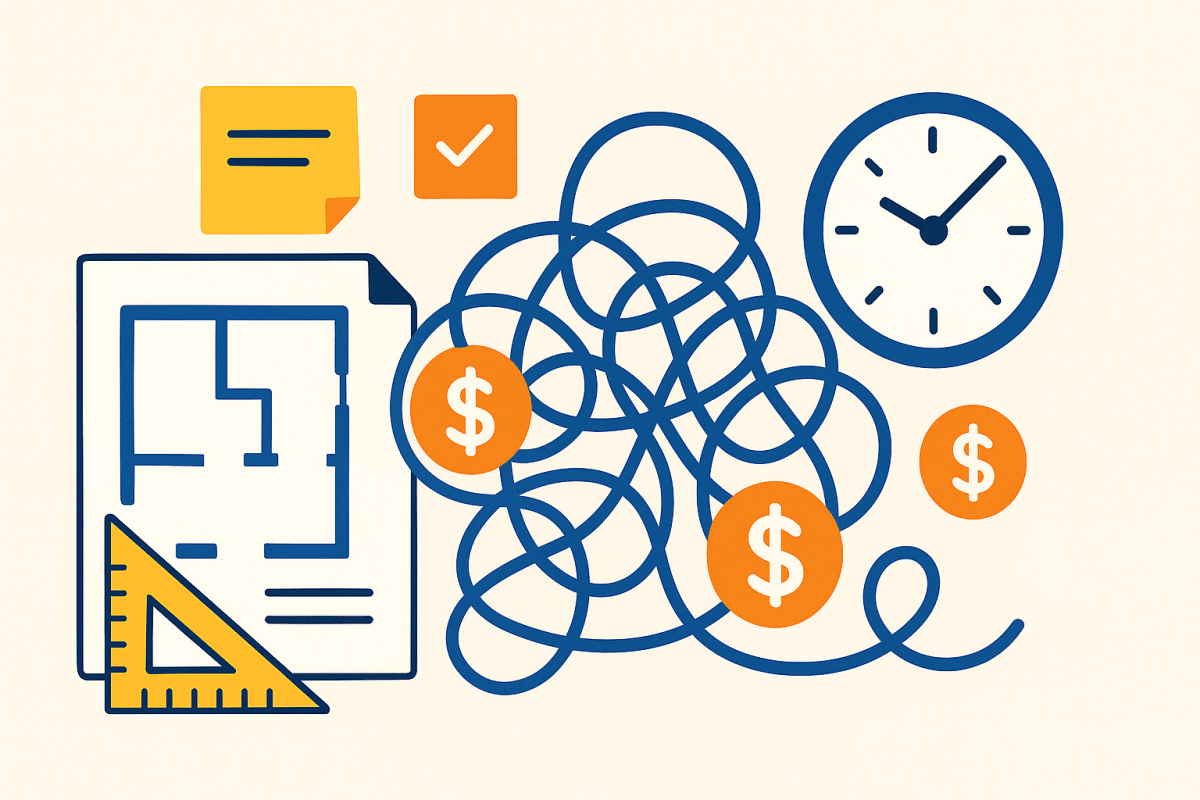
Every product team knows what technical debt is. But far fewer acknowledge design debt — the accumulation of inconsistent UX, unscalable patterns, and mismatched components that quietly inflate long-term costs.
How Design Debt Becomes a Cost Problem
- Rework multiplies: Engineers spend extra cycles maintaining divergent UIs and workflows.
- Customer support balloons: Confusing flows lead to more tickets and onboarding time.
- Conversion leaks: Each inconsistency chips away at trust and clarity, reducing activation and retention.
The False Economy of “Later”
Many teams justify postponing design cleanups to “move faster.” In reality, they’re trading short-term velocity for long-term drag. Each hack compounds until redesigns become multi-quarter projects instead of small refinements.
Design as Preventative Maintenance
Just as code reviews prevent bugs, design system discipline prevents future confusion. High-performing teams treat design like infrastructure: measured, maintained, and documented.
Start Treating Design Debt Like Financial Debt
Track it, quantify it, and schedule repayments. Every design inconsistency you clean today prevents a larger rework tomorrow — and that’s real ROI.